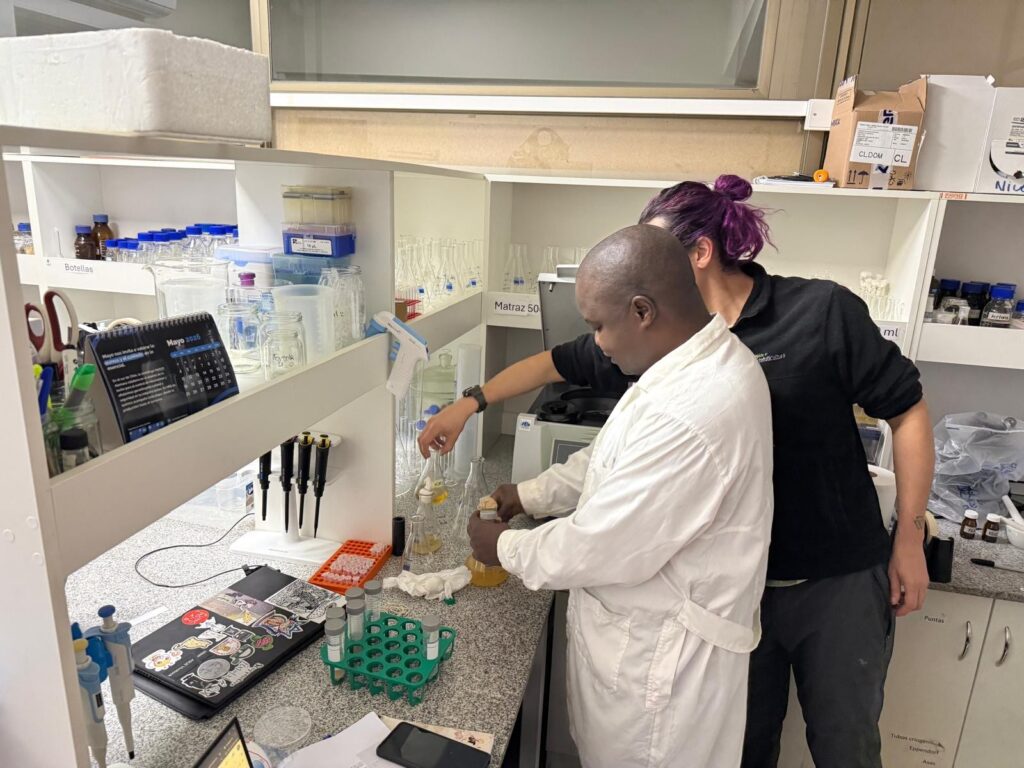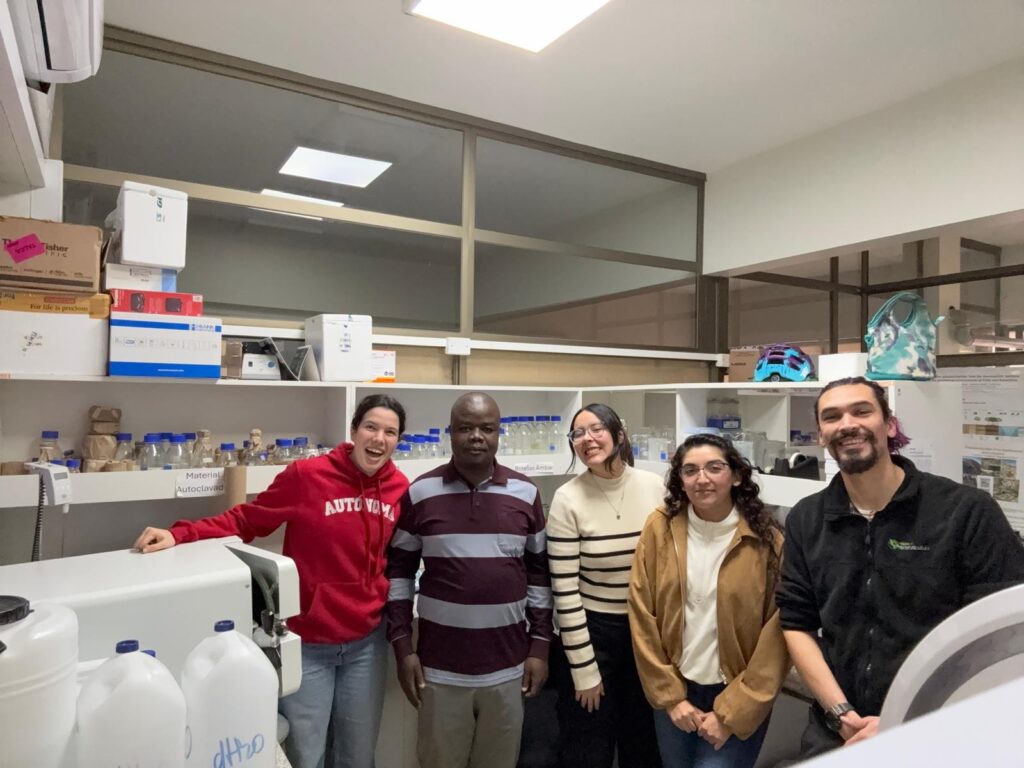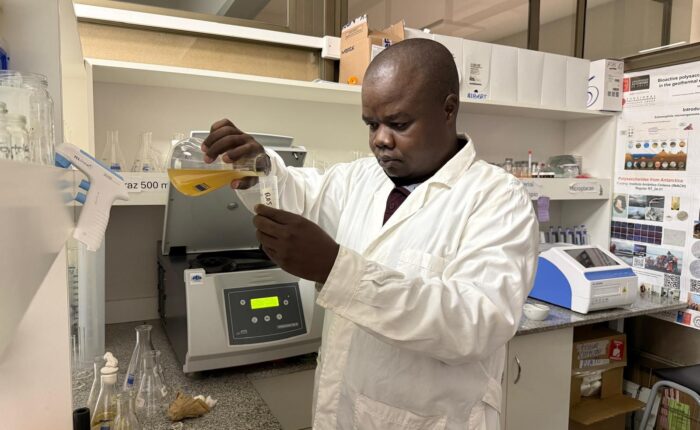
Photo: Albert Mwongula conducting research activities at the laboratory of Universidad Autónoma de Chile during his international research fellowship under the Kenya–Chile scientific collaboration programme.
Alupe University lecturer Albert Mwongula is making significant strides in international scientific research through a collaborative programme linking Universidad Autónoma de Chile, Masinde Muliro University of Science and Technology, and Alupe University.
Mr. Mwongula, a lecturer in the Department of Biological and Agricultural Sciences within the School of Science, Technology and Engineering at Alupe University, is also pursuing a Doctor of Philosophy (PhD) Degree in Microbiology at Masinde Muliro University of Science and Technology (MMUST).
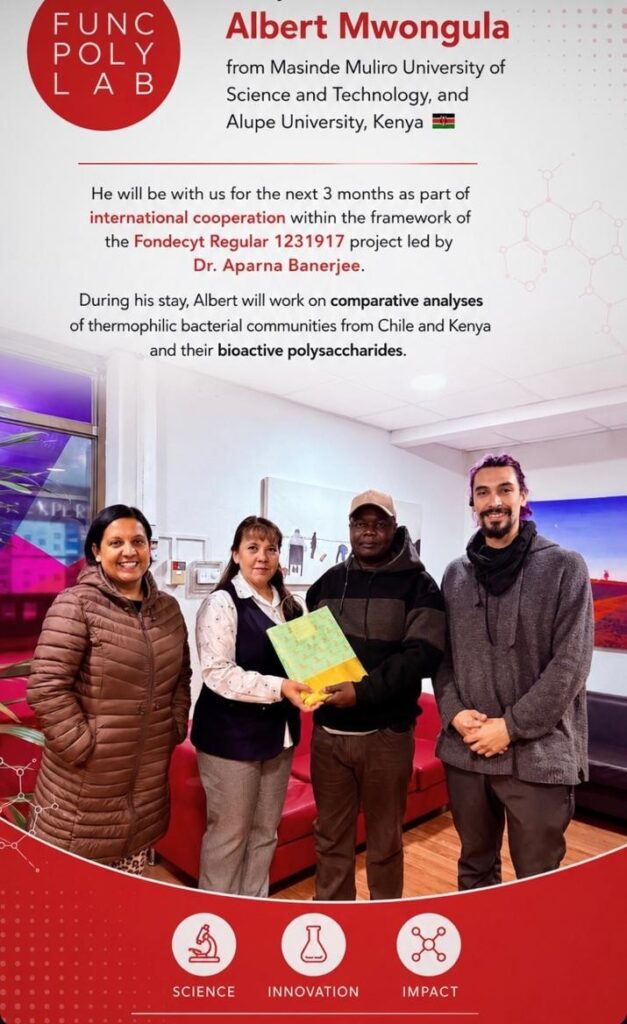
Through the growing international partnership among the three institutions, he is currently undertaking a three-month research fellowship in Chile. The opportunity has enabled him to conduct advanced research activities at Universidad Autónoma de Chile under the Fondecyt Regular 1231917 research project led by Dr. Aparna Banerjee. The project explores bacterial communities that thrive in extreme environments and examines their bioactive polysaccharides with potential scientific and industrial applications.
Mwongula’s PhD research focuses on “Unraveling Microbial Diversity and Adaptive Genomic Signatures in Relation to Geochemical Profiles of Kenya and Chile’s Geothermal Environments.” His study seeks to deepen scientific understanding of microorganisms found in geothermal ecosystems and how they adapt to harsh environmental conditions.
He is undertaking the research under the mentorship of Dr. Patrick Okoth of MMUST and Dr. Aparna Banerjee of Universidad Autónoma de Chile.
The collaboration highlights the growing global research footprint of Alupe University and the value of international academic partnerships in advancing scientific innovation, research capacity, and knowledge exchange. The research team is optimistic about expanding the collaboration beyond the current exploration phase, which runs until 2027.